Data Acquisition and Instrument Toolkits
At some point a DSP design has to meet real measurements. The acquisition toolkits cover that boundary: configuring hardware channels, triggering a capture, scaling raw counts into engineering units, and storing the record so the same processing code can be replayed against it later.
Cards and bench instruments are presented through one channel model. A channel has a source, a sample rate, a range and a calibration, whether the samples arrive from a USB DAQ card or from an instrument answering SCPI commands over a network.
Triggering and long captures
Continuous acquisition is written to disk with timestamps, so a capture is not limited by available memory. Level, edge and window triggers select the events of interest, and pre-trigger buffering keeps the samples that arrived before the trigger fired, which is usually where the cause of an event is visible.
Calibration and validation
Raw converter counts are meaningless without a calibration. Per-channel gain, offset and unit are applied at capture time and stored with the record, which prevents the common failure of analysing a file whose scaling is no longer known.
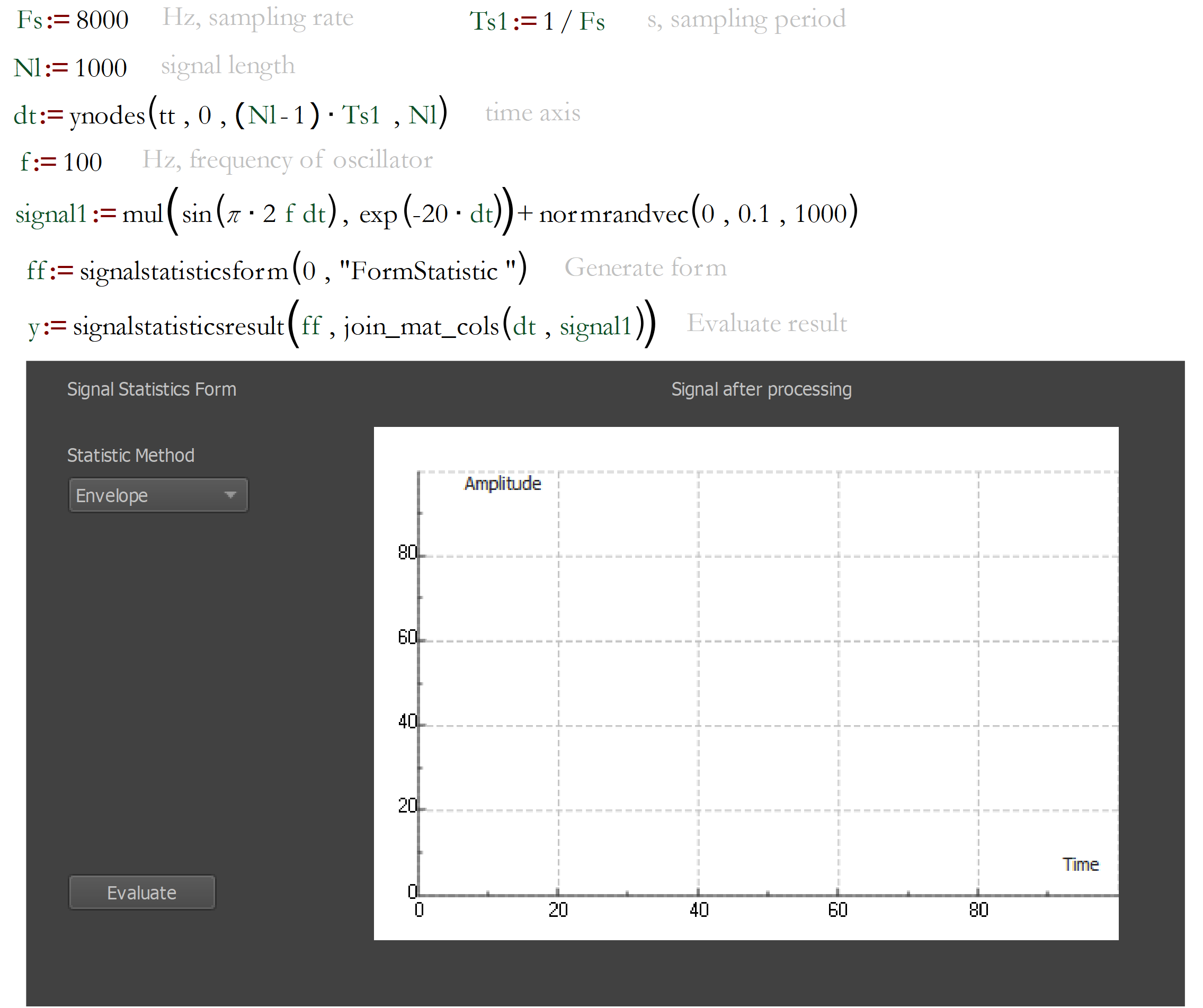
Because acquired data is noisy and occasionally faulty, the statistical toolkit pairs naturally with acquisition: distribution checks, drift estimates and outlier detection on the captured record catch a failing sensor before its data reaches the processing chain.